
Private AI
for confidential data

Use AI on source code, deal documents and customer records without exposing them. The agent, its tools and the model call run in hardware nobody else can read, under rules you set, with a signed record of what it did.

Your dataCode, documents, records
Your keyOnly you can release it
Locked environment · your cloud
Codex or your agentDoes the task you give it
Tools you allowEverything else is refused
OpenAI Private InferenceThe model, in its own locked hardware
checked first
ResultsBack into your systems
Signed recordFor you and your auditor

Can't read your data: the cloud provider, the model provider, EQTY

Built on private inference

Two ways to use it. Both run in confidential hardware and call OpenAI Private Inference.

Private Containers

Private containers for the agents you build and run. Bring a framework or your own code.

Confidential container
LangChainFramework
OpenCodeCoding agent
PiCoding agent
Your ownAny agent you build
Private Codex

Codex for work, on your confidential code and documents. Set up, locked down and ready for your team.

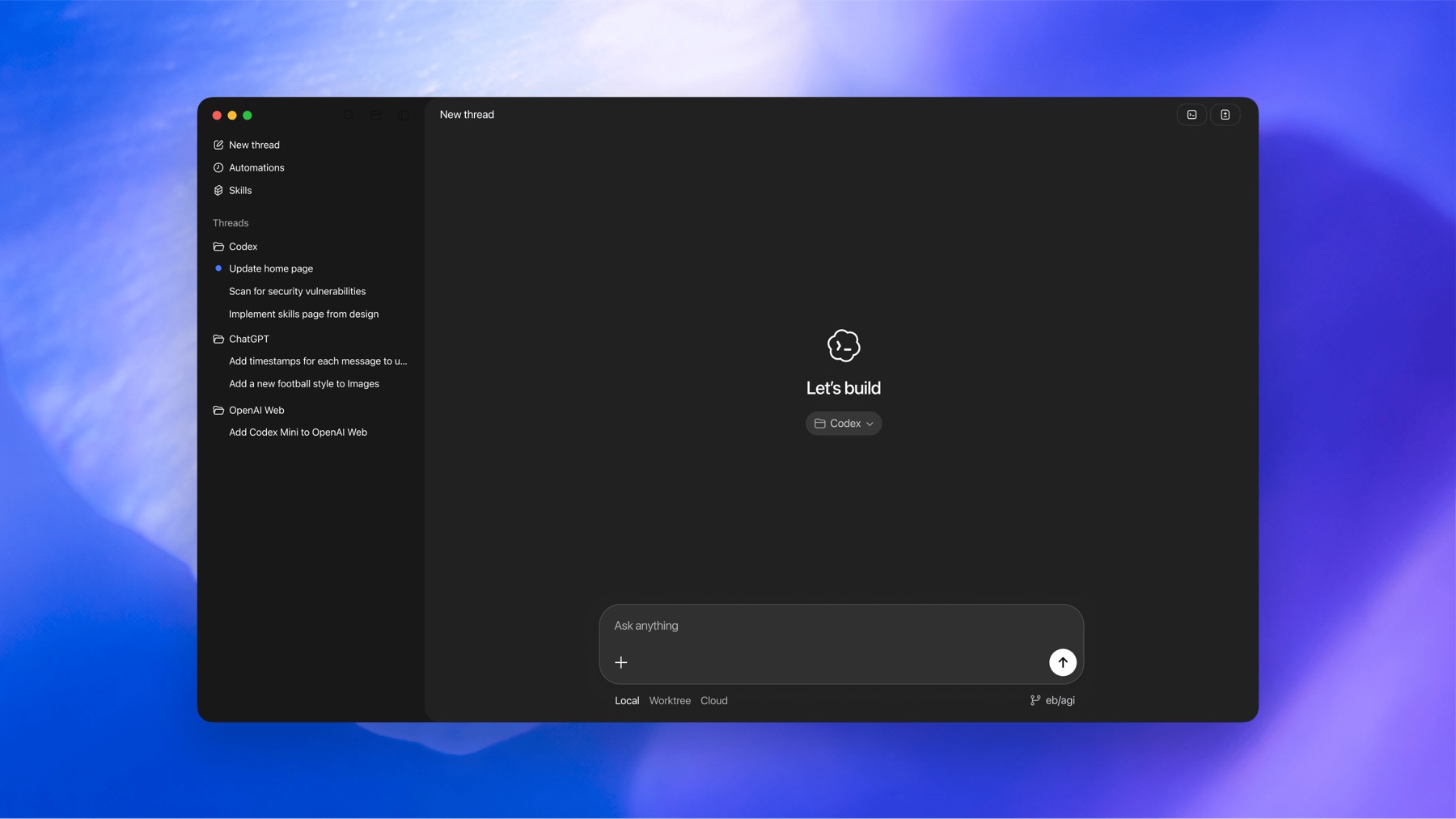
The Codex app for macOS: threads grouped by project on the left, a new thread on the right.
OpenAI Private InferenceEvery model call, from either one, goes to verified confidential hardware

How it stays private

  1. Confidential computing, end to end

    Codex runs inside hardware that encrypts it while it works, proves what it's running, and gets your keys only after that proof checks out.

    Cloud host · hypervisor, host OS, operatorscan't read inside
    Confidential VMTDXSEV-SNP
    NVIDIA OpenShell sandboxfiles, system calls, network by policy
    Codexyour repos, decrypted only here
    GPU in confidential modeEncrypted link to the VM. Optional, for models you run yourself.
    measured VM image · OpenShell policy · Codex build 9f3a…c1
    OpenAI Private InferenceIts own confidential hardware, checked before each call
    • Encrypted while it runs

      Intel TDX and AMD SEV-SNP encrypt the VM's memory with keys held inside the processor. The cloud provider's hypervisor, host OS and staff can't read it. NVIDIA GPUs in confidential mode extend that protection over an encrypted link.

    • The hardware proves what's running

      At start-up the chip measures the VM image, the OpenShell policy and the Codex build, and signs the result. We check that report against the build you approved.

    • Keys only after proof

      Your keys are released to that exact measurement and nothing else. Change the image or the policy and the keys stay locked.

    • A sandbox inside the sandbox

      Inside the VM, OpenShell confines Codex to the files, commands and network endpoints your policy allows, and keeps real credentials away from it.

  2. Your key, your data

    Data is decrypted only inside locked hardware, and only for a task you approved. You hold the key. Revoke it and everything that uses it stops.

  3. Rules on every action

    You decide which data, tools and models each task may use. Anything else is refused, even if the agent is told to try.

  4. Only verified models

    Model calls go to private services such as OpenAI's, only after their hardware is checked, and only to the machine that was checked.

  5. A record you can check

    Every task leaves a signed record of what went in, what was called and what came out. Your auditor can verify it without an EQTY account.

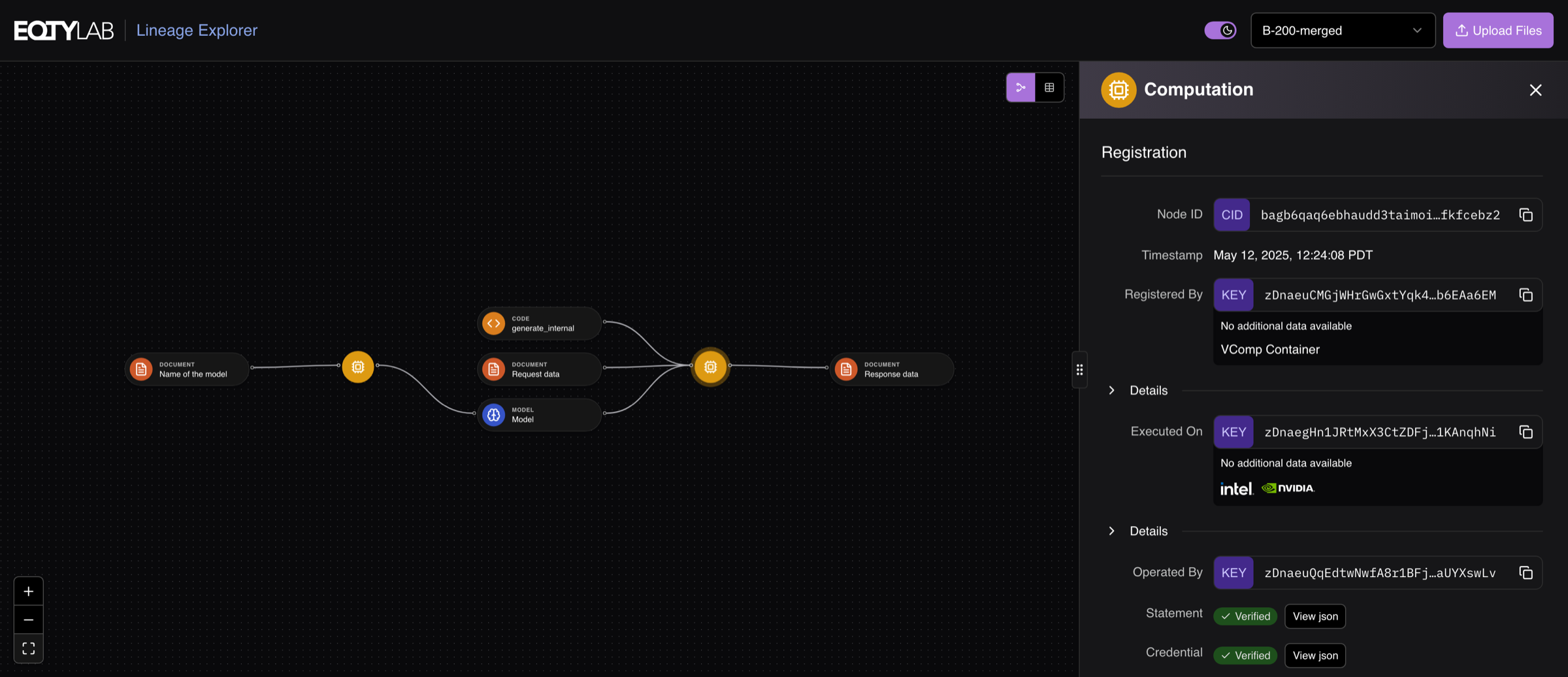
  6. Lineage Explorer: a chain from model and request data through a computation to the response, with the computation selected. Its panel shows it ran on Intel and NVIDIA hardware, and its statement and credential are verified.

    Every step, traceable

    The full chain of a task is a graph you can explore: the data, code and model that went in, the hardware each step ran on, and what came out. Select any step to see who ran it, where, and the signatures that prove it.

What security, auditors and stakeholders need for assurance

Every task produces evidence your reviewers can check themselves. It maps to the laws and standards they already work with, across the US, the EU, the UK and beyond.

  • Hardware attestation reports

    Signed by Intel, AMD and NVIDIA hardware for every environment that touched the data.

  • Signed task records

    Inputs, actions, tool and model calls for every task. Verifiable offline, without an EQTY account.

  • Key release log

    When each key was released, to which measured environment, and for which task.

  • Policy history

    Every version of the rules each task ran under, who approved it and when.

  • Data lineage

    The chain from source data to output, step by step, with where each step ran.

  • Review documents

    Architecture, data flow and controls, generated from the real setup for security reviews and impact assessments.

Maps to the laws and standards your reviewers use

  • EU
    GDPREUArt. 32 security · Art. 35 impact assessment
  • EU
    EU AI ActEUArt. 11 documentation · Art. 12 record-keeping
  • EU
    DORAEU financialICT risk · third-party providers
  • UK
    UK GDPRUnited KingdomArt. 32 security of processing
  • US
    HIPAAUnited States§164.312 audit controls · encryption
  • California
    CCPACaliforniaRisk assessments · automated decisions
  • Colorado
    Colorado AI ActColoradoImpact assessments for high-risk AI
  • New York
    NYDFS Part 500New YorkCybersecurity program · audit trail
  • SOC 2AICPASecurity and confidentiality criteria
  • ISO/IEC 27001ISOInformation security controls
  • ISO/IEC 42001ISOAI management system
  • NIST AI RMFNISTGovern · map · measure · manage

Also: Canada PIPEDA · India DPDP Act · Japan APPI · EU NIS2 · US GLBA

EQTY provides evidence and controls. Compliance depends on how you use them, so confirm the mapping for your case with your counsel and auditors.

Everything around the model

Locked hardware
Agents and their tools run in confidential computing on Intel TDX, AMD SEV-SNP and NVIDIA GPUs, in your cloud or ours. Neither we nor the cloud provider can read the data.
Rules
Set per task, built in Routines. Each one lists what the agent may read, call and send.
Your keys
Released only to approved tasks on verified hardware.
Verified models
Checked before every call. Other outside calls are blocked unless a rule allows them.
Signed records
Inputs, actions and calls for every task, verifiable without us.
Approval documents
The answers a security review asks for, generated from the real setup and records. For regulated data, HIPAA and EU AI Act documents too.

Where teams start

Unreleased source code

Software

An agent reviews and changes code for a product that hasn't launched. It can reach the repository and the model, nothing else.

Merger documents

Corporate development

An agent summarises a data room for a deal that's still secret. Only the summary leaves, and the record shows who ran what.

Medical claims

Insurance

An agent reads health records and drafts claim decisions for a person to sign, with HIPAA documents for legal.

Runs on

  • OpenAI
  • Azure
  • NVIDIA

Start with one project

A pilot puts one AI use case into production on your data in about 8–12 weeks, with the documents your security team needs to approve it.